
I realized just how much people are willing to pay (and sacrifice) just to claim a piece of New York City.
New York City is a place where millions of people arrive every single year, chasing the ultimate American dream. The iconic skyline, the bright billboard lights of Times Square, and the promise of endless opportunity draw dreamers from every corner of the globe.
But in 2026, that dream comes with a jaw-dropping price tag.
Manhattan’s median rent has recently shattered records, soaring past $5,200 a month. With a vacancy rate hovering at a critical 1.49%, the city is facing a historic housing emergency.
Why is living here so incredibly expensive?
It boils down to severe inventory shortages, highly restrictive zoning laws, and a relentless demand that far outpaces the physical space available on this tiny island.
For ordinary people, surviving here means making radical compromises. New York forces everyone to adapt or get left behind. That’s why young professionals are renting spaces smaller than a standard parking spot, while families are redefining what a home looks like.
Curious to see what these spaces actually look like inside? Check out the full documentary above on my YouTube channel, and don’t forget to subscribe as we push toward our goal of one million subscribers!
The $420 Micro-Hotel Reality
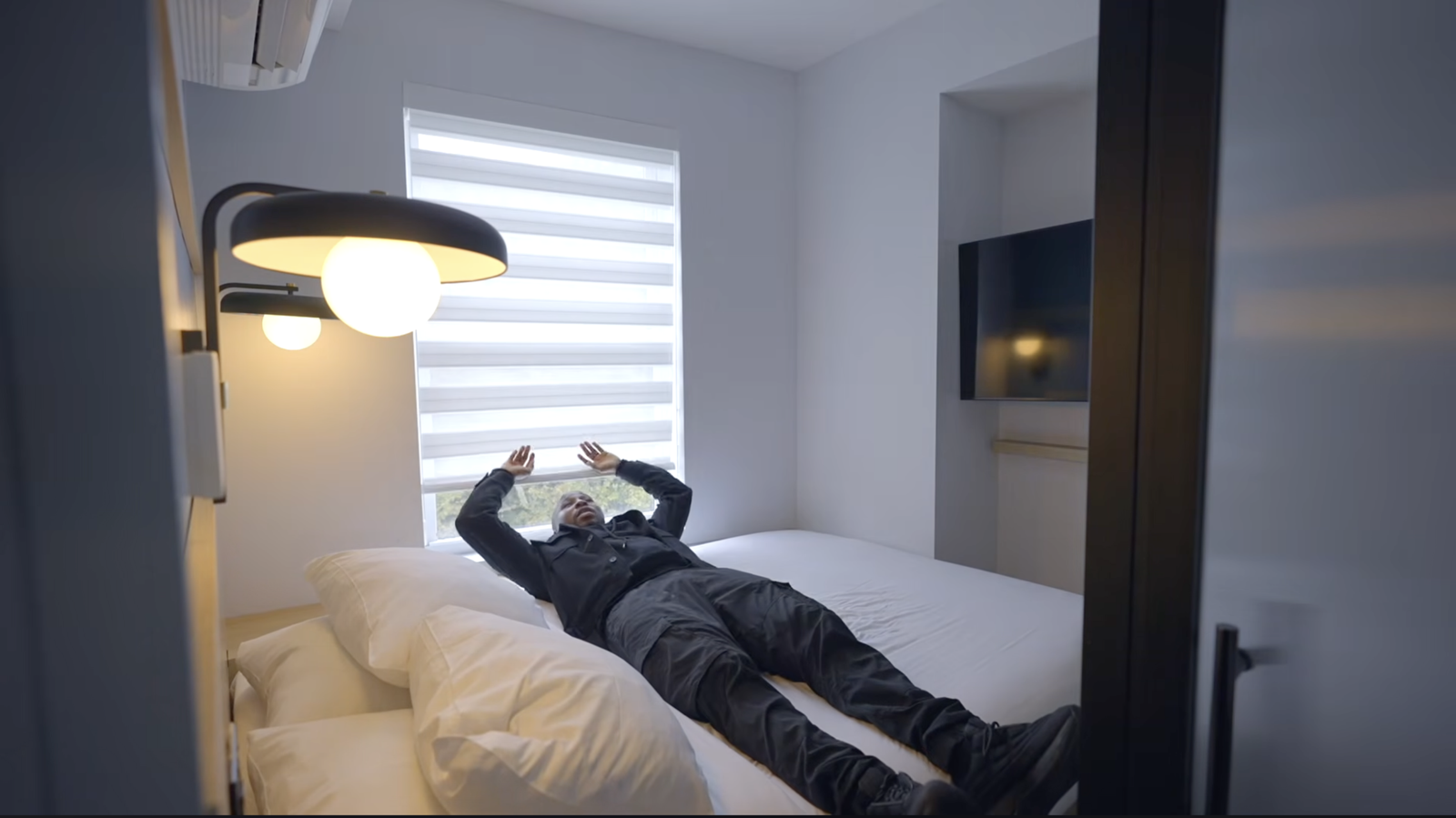
My journey into the heart of New York’s housing crunch started the moment I checked into my own accommodation.
I paid $210 for a single night (making it $420 for a two-night stay), and what I got was a reality check. The room was so incredibly tight that if I lay down from end to end, my 5’9″ frame practically touched both walls.
There was a single window, a queen-size bed squeezed into a corner, a tiny vanity to brush my teeth, and a micro-bathroom. Just opening my travel suitcase required strategic planning.
Yet, as small as this hotel room was, I was about to discover it was actually spacious compared to where some locals live permanently.
$2,000 to Sleep Under a Spinning Ceiling Fan
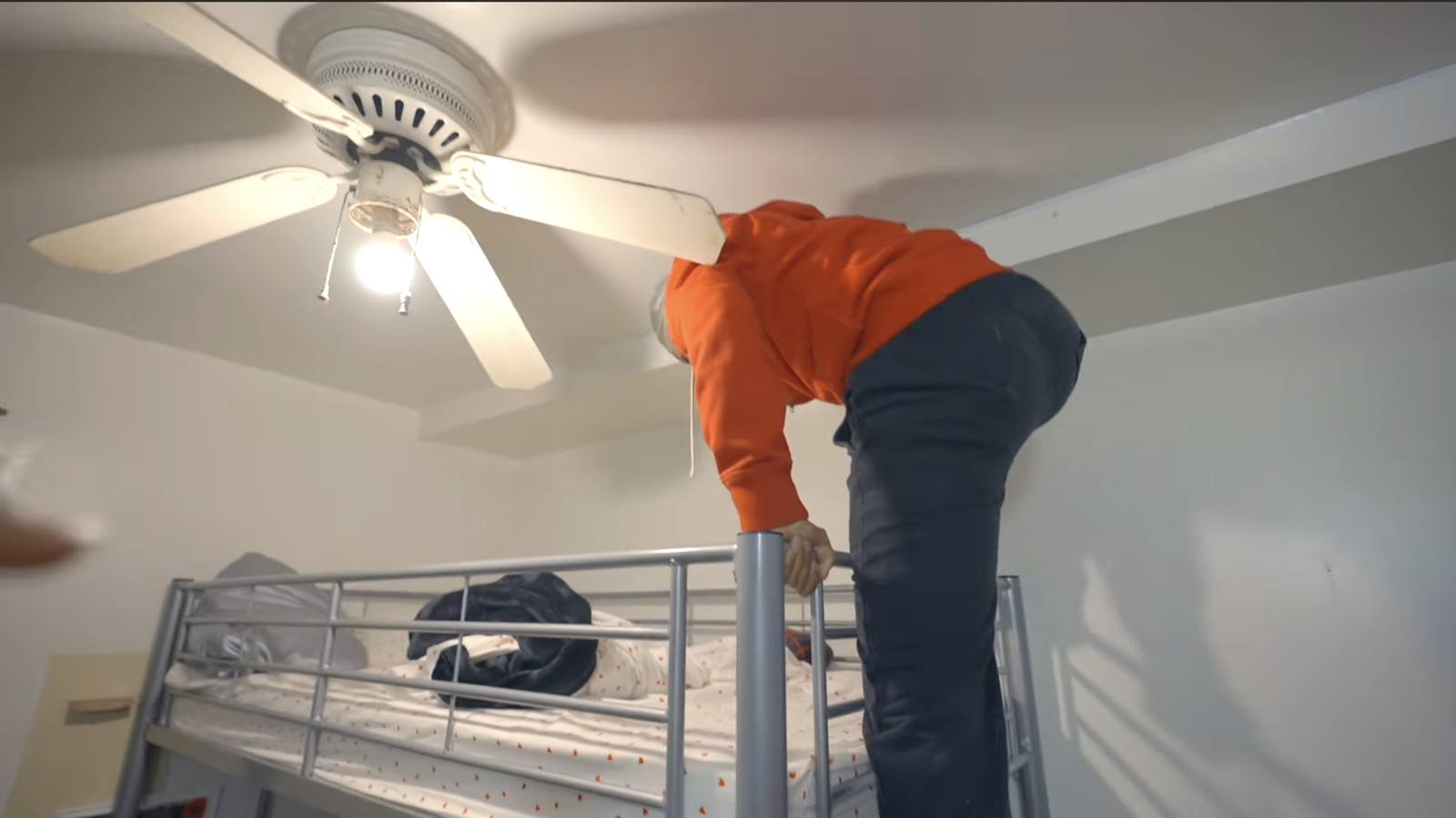
I traveled down to Times Square to meet Tee, a resilient 25-year-old chef who shares a micro-studio apartment with her dog, Lady, and her cat, Kitty. Tee pays $2,000 a month for a room where her kitchen, living room, and bedroom are completely fused into one. To maximize the floor plan, she had to install a loft bed over her sofa just so her family would have a place to sit when they visited.
Living here comes with literal physical hazards. Because the apartment lacks proper ventilation and only has two windows—one blocked by an AC unit and the other broken—the air gets incredibly hot. Tee sleeps mere inches from a whirring ceiling fan. “I’ve definitely banged my head on it in the middle of the night,” she told me with a shrug. You get desensitized to the struggle when you are just trying to get by.
The tragedy of the New York market is how fragile safety can be. Tee moved into this space to escape a shelter, choosing the high rent because it was a 20-minute walk to her job at Lincoln Center. But just two weeks before my visit, she was laid off. Now, she is relying on family support and trying to launch a catering business to keep a roof over her head.
The $100 Challenge: Watch How Fast Money Vanishes
To understand why people struggle here, I decided to take a single $100 bill and see how long it would last me as a tourist exploring Manhattan. Back home in Nigeria, $100 can go a remarkably long way. In New York, it vanishes like smoke.
- Brooklyn Bridge Souvenirs: I started small, picking up a few basic trinkets for $3.
- The Vessel: A trip up this 150-foot architectural marvel in Hudson Yards cost me $18 just to climb its 2,500 steps.
- The Edge: To stand on a floating platform hanging off a cliff for a view of the city cost $51 plus taxes.
- Summit One: Another Instagram-famous viewpoint filled with mirrors and balloons set me back $55.
In just four hours, I had spent $155 on basic sightseeing alone. That did not even include transportation, lunch, or the mandatory tips you are expected to give for everything. To explore this city, you practically have to take a hundred-dollar bill and light it on fire.
Managing My Money Globally With Raenest
Traveling the world means dealing with constant currency friction, especially in high-cost cities like New York. To manage my expenses on this trip without getting hit by surprise fees, I relied on Raenest, the sponsor of this journey.
As a Nigerian, my primary currency is Naira. However, the multi-currency exchange feature on the Raenest app allows me to fund my account in my local currency and seamlessly spend in Dollars, Euros, or Pounds depending on where I am. I used my physical Raenest card for a $70 breakfast, linked my virtual card to Apple Pay to tap and ride the NYC subways, and avoided the headache of traditional banking delays. If you want a platform that lets you receive and spend money across 190 countries with competitive rates, go ahead and download Raenest.
Six Figures vs. A Half-Size Fridge
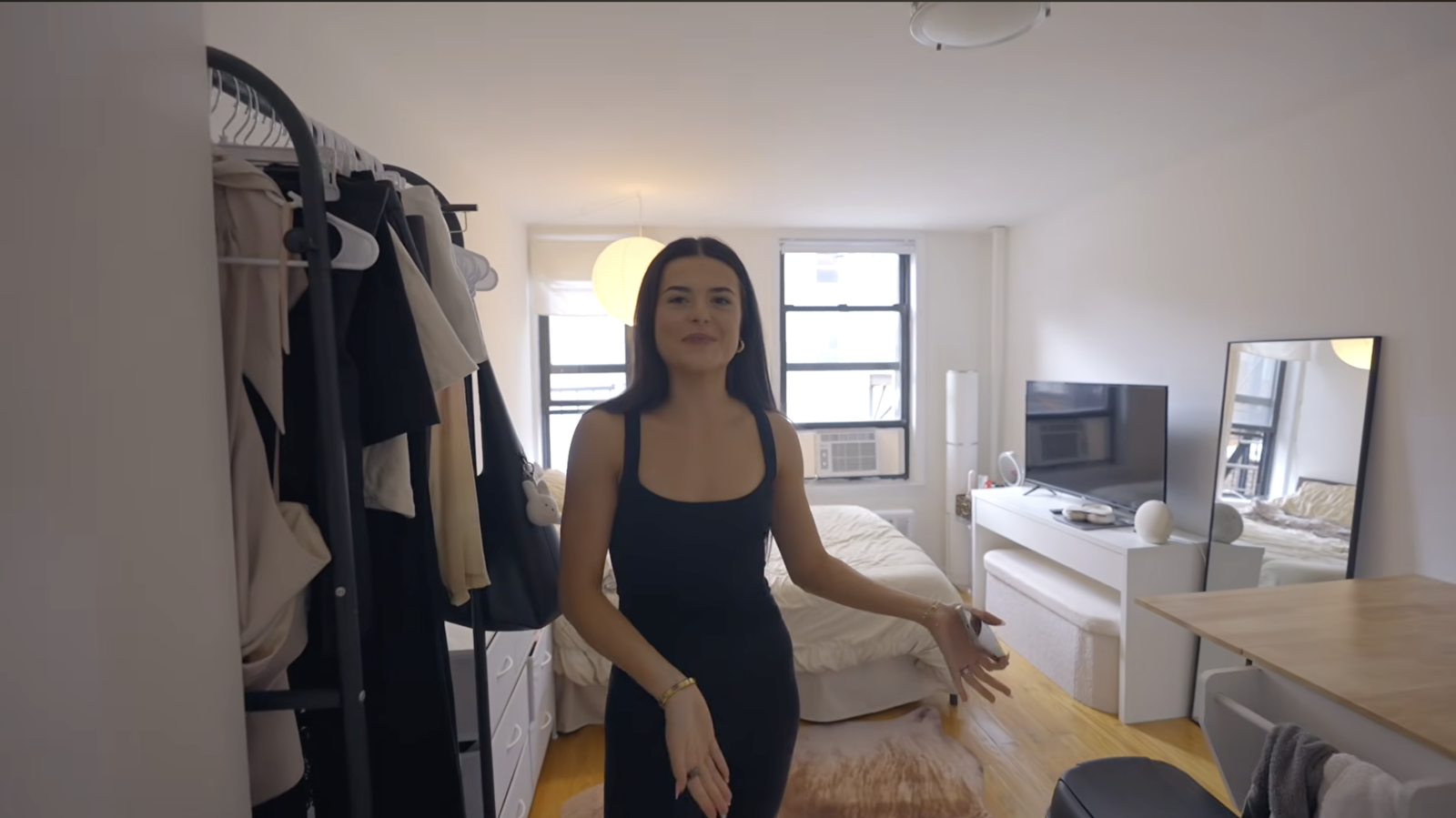
Next, I visited Kayla, a nurse who relocated to New York from Florida just two months prior. In Florida, Kayla lived with her parents, where her bedroom alone was the size of her entire new apartment. Now, she pays $2,100 a month for a studio where the kitchen island is two steps from her bed.
Because space is so limited, she grocery shops three to four times a week just to fit items into a half-size refrigerator. She does not even own a microwave, choosing an Amazon kitchen island to house a tiny air fryer instead.
So why make the sacrifice? For Kayla, the math makes sense. In Florida, she made around $60,000 a year working three days a week. In New York, she pulls in well over six figures. Even after the city’s heavy taxes, she walks away with substantially more money and unmatched career opportunities. Her version of a luxury balcony is sitting out on the metal fire escape with a morning cup of coffee.
Raising a Family in 700 Square Feet
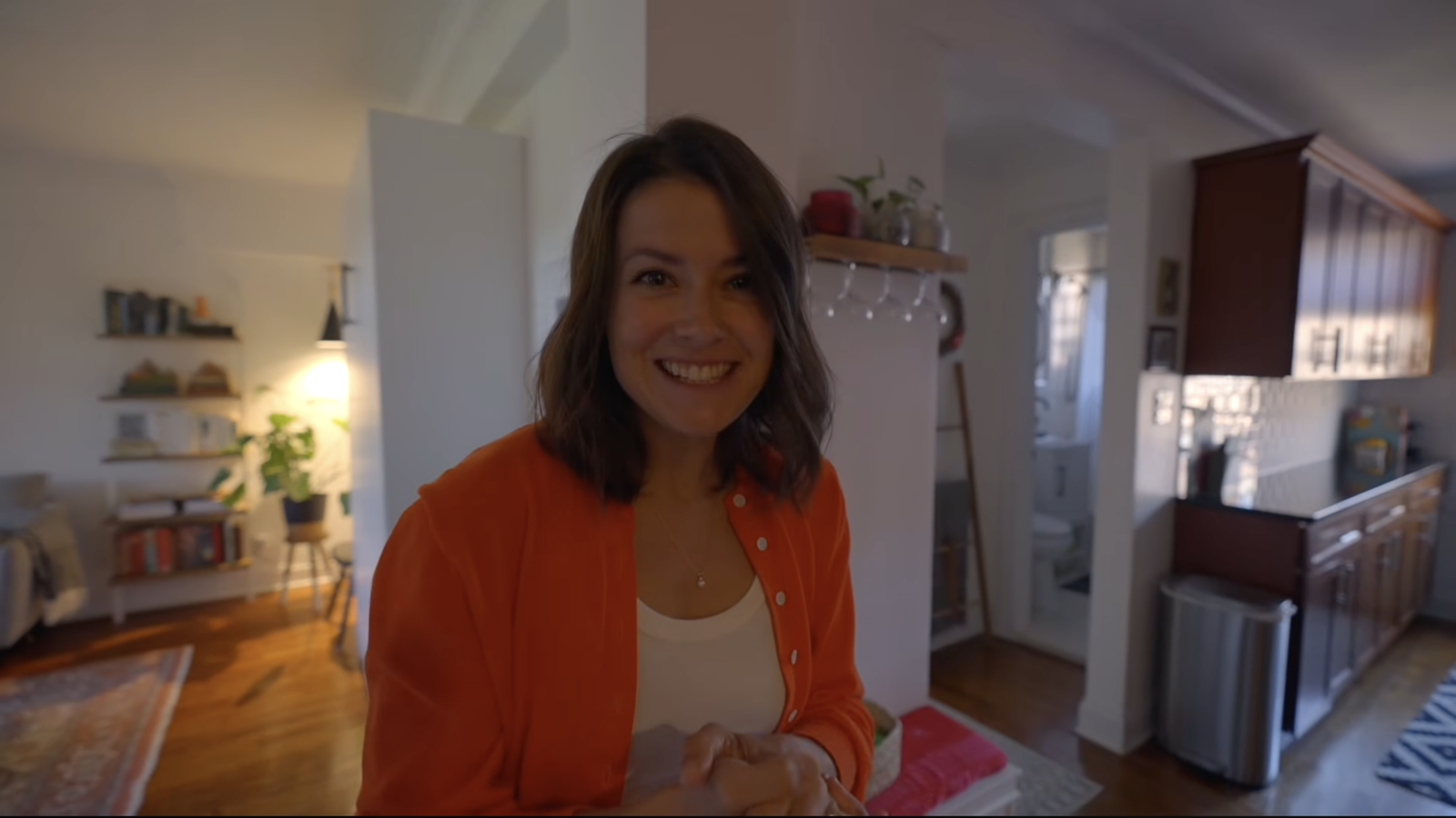
Uptown, away from the chaotic core of Manhattan, I met Christina. She lives with her husband and two children in a 700-square-foot, one-bedroom apartment. They actually own the property, though she estimates it would rent for close to $3,000 a month on the open market.
To make the layout work, the adults sleep on a Murphy bed built directly into the living room wall. By day, it serves as an office and dining area; by night, the bed pulls down, transforming the space. The children get the apartment’s single official bedroom.
+-------------------------------------------------------------+
|               CHRISTINA'S 700 SQ. FT. LAYOUT                |
+-----------------------------------+-------------------------+
|                                   |                         |
|            LIVING ROOM            |      KIDS' BEDROOM      |
|    (Murphy Bed / Daytime Office)  |  (Dedicated Private)    |
|                                   |                         |
+-----------------------------------+-------------------------+
|             KITCHEN               |        BATHROOM         |
+-----------------------------------+-------------------------+
Christina faces plenty of internet critics who claim raising kids in such a tight space is inhumane or illegal.
She strongly disagrees. “The people who say this are people who have a very American perspective of what space is,” she told me. Coming from China, she views a 700-square-foot apartment as completely normal and highly functional.
From $4,500 Rentals to a $16 Million Palace
To see what the upper tier of the market looks like, I toured an empty one-bedroom, one-bathroom unit on the Upper West Side listed at $4,500 a month.
To secure a place like this, landlords typically require you to earn three times the monthly rent, meaning an income of $13,500 a month ($162,000 a year), alongside a credit score in the 700s.
Considering the median household income in New York is roughly $80,000, this standard pushes ordinary citizens completely out of the neighborhood.
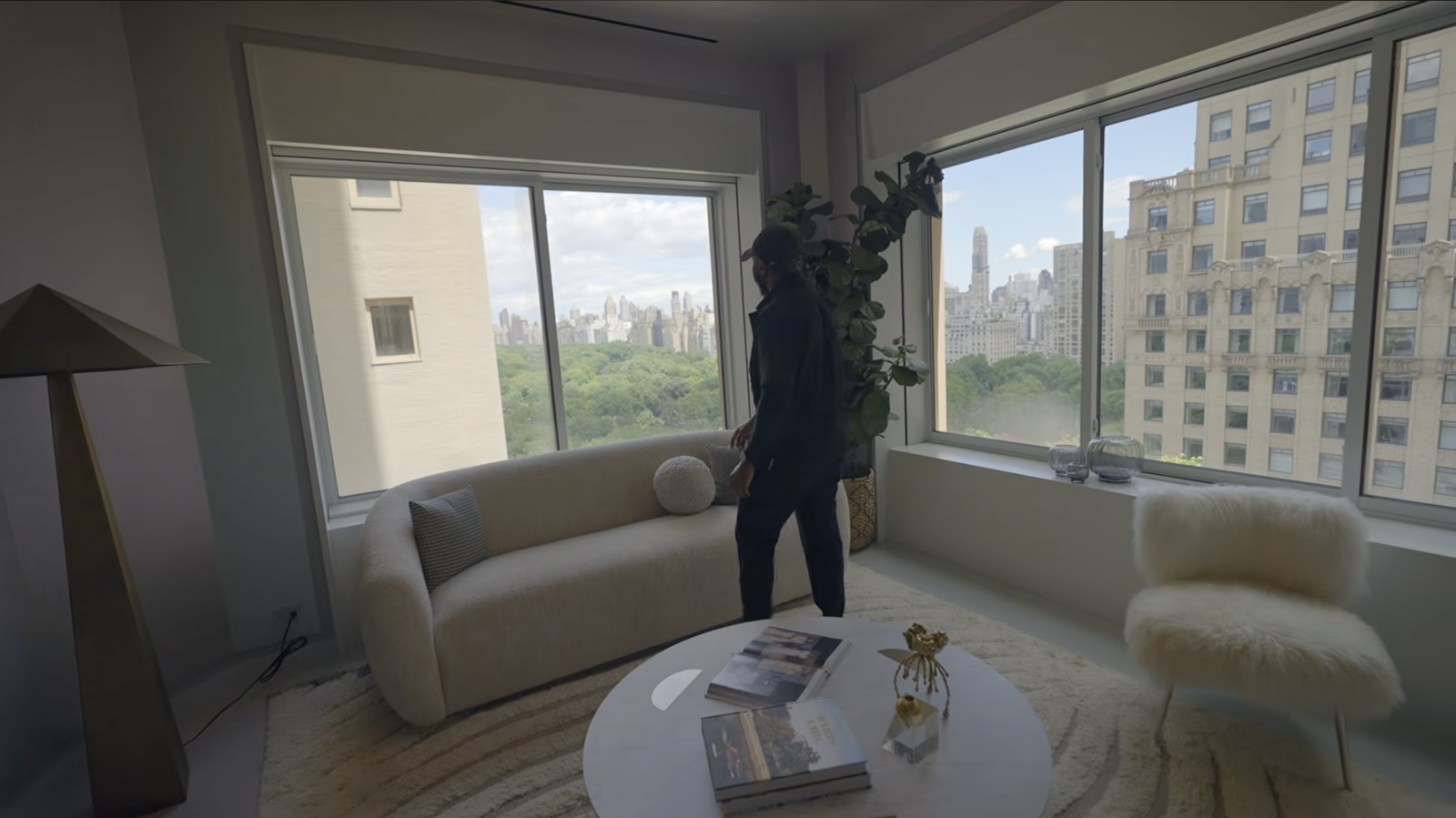
But the true ceiling of New York real estate belongs to the billionaires. I stepped inside a staggering $16 million residence overlooking Central Park. Spanning 5,450 square feet of immaculate interior, this home features massive living areas, three ensuite bedrooms, a private primary suite, a study, and a lounge.
Walking through its vast hallways, the contrast hit me hard. While everyday hustlers are paying thousands to live in rooms the size of a closet, the ultra-wealthy are buying up thin, luxury skyscrapers designed entirely for the highest bidder.
New York remains a city of millionaires (housing nearly 385,000 of them), and the architecture reflects it.
Developers are not building for the middle class anymore; everything is branded as luxury.
Conclusion: Is the Hustle Truly Worth It?
At the end of the day, New York City is a beautiful contradiction.
It is a grueling, expensive machine that will swallow your funds in a matter of hours if you let it.
A local teenager I talked to on the street put it best: “If you want to live here, you better be a hustler because it’s not easy.”
If you make $100,000 a year in Africa, you are balling like a king. If you make $100,000 in Manhattan, you are just an average human being trying to survive the mess.
Yet, despite the claustrophobia and the financial strain, the people I met are not leaving. Tee told me that every single night, she looks around her tiny room and thanks God she has a roof over her head and that her pets are fed. That gratitude, paired with the relentless drive to build a better life, is the real heartbeat of New York.
What do you think? Would you pay $2,000 a month to live in a room the size of a parking space just to chase your dreams? Let me know your thoughts in the comments below!
- Watch the full episode: Head over to my YouTube channel to see the cinematic tours of these micro-apartments and the $16M penthouse.
- Subscribe: Hit that subscribe button so you don’t miss our upcoming cultural documentaries across the globe. Help us reach 1 million before the year ends, or I might just vanish like the Avatar!
- Share: Send this post to a friend who dreams of moving to New York City.
Special thanks to my producer, Kemi, for helping me film and produce this incredible episode. See you on the next journey!