
When I stepped onto 57th Street and looked up at the towering high-rises of Billionaires’ Row, I couldn’t help but ask myself, “Does New York City truly live up to its reputation as one of the most expensive cities in the world?”
From its humble origins in the 1600s as a small Dutch trading settlement to its evolution into a global financial and cultural epicenter, New York has earned its reputation as the ultimate proving ground.
If you can make it here, you can make it anywhere.
Today, Manhattan holds the highest concentration of USD millionaires on Earth, with roughly one in every eight residents achieving millionaire status. It is a magnet for global wealth, ambitious hustle, and extreme architectural innovation.
To understand what top-tier luxury looks like in the city of skyscrapers, I joined luxury real estate advisor Sere Conde from The Eklund Gomes Team for a private tour of a $16 million residence overlooking Central Park. Here is what it takes to live at the very top of New York City.
Watch the Tour Live: Don’t forget to check out the full property walk-through on YouTube to experience these viewlines for yourself, and subscribe to the channel as we push toward 1 million subscribers!
The Economics of Billionaires’ Row & Vertical Living
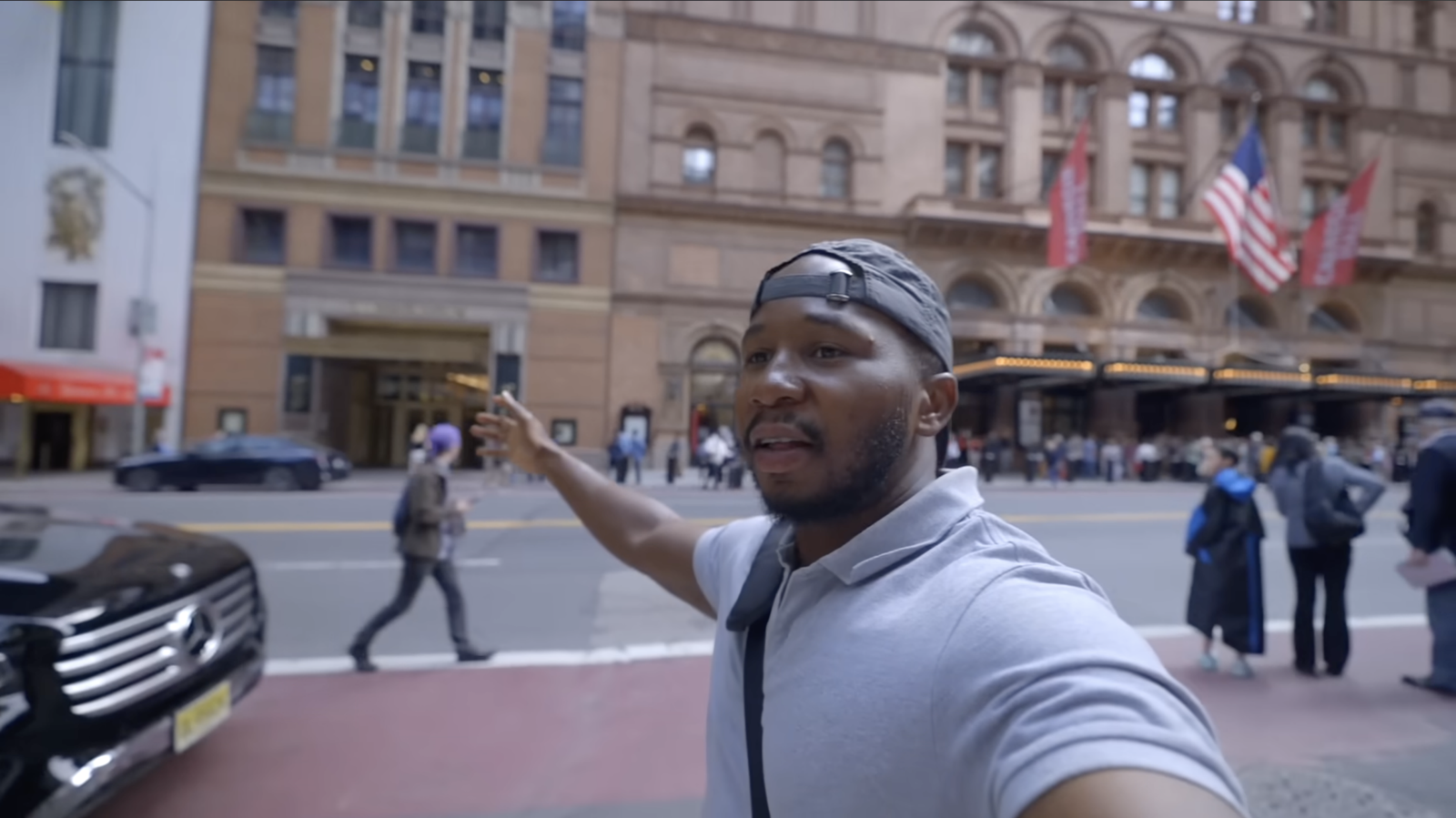
Our exploration began on 57th Street, famously known as Billionaires’ Row. This iconic corridor features some of the most expensive residential towers ever constructed, where penthouses can command upwards of $90 million. On 57th Street, having $50 million isn’t always enough to secure top-floor trophy assets—you are competing in a market built specifically for billionaires and centi-millionaires.
Living in New York requires a constant, high-octane hustle. Everyday expenses mount rapidly:
- A single cup of coffee or matcha runs around $12.
- Subway rides cost $3 a trip, while daily regional train commutes easily reach $30 a day.
- A baseline day out in the city will easily set you back $60 minimum before factoring in meals or rent.
Because Manhattan is an island with virtually no open land to expand outward, it evolved into a vertical city housing over 300 skyscrapers. To construct ultra-slim residential towers on tiny plots, engineers install giant tuned mass dampers—massive steel balance balls weighing huge tonnage at the top of the structures—to stabilize the buildings against high ocean winds.
While average New Yorkers rent small “shoebox” apartments in neighborhoods like the West Village for $6,500 to $8,000 a month, ultra-high-net-worth buyers purchase massive vertical estates high above the city noise.
Space, Scarcity & Central Park Views

Stepping into Residence 21A, the immediate highlight is the sprawling living room featuring 50 feet of direct frontage overlooking Central Park.
Spanning 5,450 square feet (roughly 500 square meters), an apartment of this scale is a rare luxury in Manhattan. To create this expansive floor plan, the current owner purchased an adjacent studio apartment and seamlessly combined it with the main residence.
The property offers an incredible perspective on Central Park, framing both Central Park East and West. Sere Conde explained why this specific greenery commands such a massive price premium:
“The reason developers could never build on Central Park is because the government permanently protected it as a landscaped park. Otherwise, Manhattan would be an island full of concrete buildings stacked on top of each other, feeling completely soulless. Central Park brings soul, calm, and beauty to New York.” — Sere Conde
The architectural details within the home are equally distinctive:
- The Hidden Kitchen: Designed with custom architectural paneling that resembles an elevator shaft at first glance, concealing integrated refrigeration, high-end gas stovetops, and built-in ovens.
- New York Dining Culture: Despite having a fully equipped chef’s kitchen and dining nooks, most high-earning New Yorkers rarely cook heavy meals at home due to the city’s world-class restaurant culture and fast-paced work schedules.
The Primary Suite & The Reality of Staging
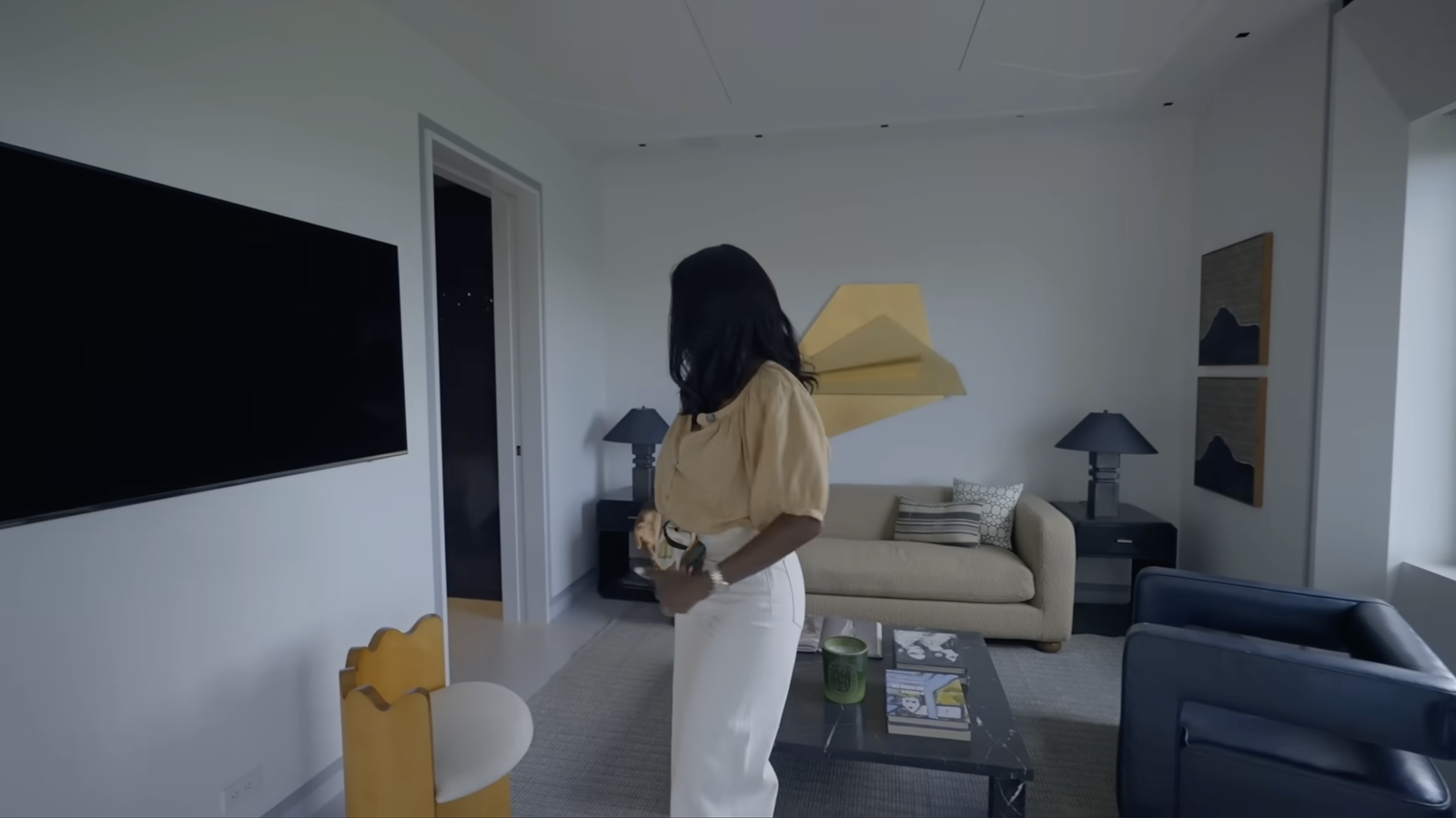
Walking through the long, art-lined gallery hallway leads to the primary bedroom suite. Designed as a private sanctuary within the apartment, the primary suite includes a dedicated sitting room, unobstructed east-facing park views, and an extensive walk-in closet featuring automated wardrobes that open at a touch. The suite’s ensuite bathroom features custom resin artwork and glass standing showers.
A fascinating insight into luxury real estate sales is the concept of staging. When multi-million-dollar properties sit empty, prospective buyers often struggle to visualize scale and furniture placement.
To solve this, sellers hire staging companies to fully furnish the residence with high-end designer decor. For a residence of 5,450 square feet, professional furniture staging can easily cost $20,000 per month in rental fees alone until the property sells.
Who Buys a $16 Million Apartment?
Who is the target buyer for a $16 million residence in Manhattan? According to Sere Conde, properties along Central Park at this price tier are predominantly purchased as a pied-à-terre—a secondary or tertiary home away from home.
Several key market dynamics define real estate transactions at this level:
- Primary Buyer Profile: Buyers predominantly acquire these residences as secondary or tertiary lifestyle properties (pied-à-terre).
- Purchasing Method: Transactions valued at $5 million and above are almost exclusively 100% all-cash deals, with mortgage financing being extremely rare.
- Long-Term Rental Value: If an owner decides to place a 5-bedroom residence of this size on the rental market, it commands a minimum of $50,000 per month.
- Short-Term Lease Rules: New York City regulations strictly forbid short-term rentals or Airbnb stays under six months, requiring minimum lease agreements of 6 to 12 months.
The typical buyers include fintech founders, hedge fund managers, international investors, or coastal executives who already own primary estates in places like the Hamptons, Paris, Connecticut, or Tuscany.
Conclusion & Summary
Touring a $16 million home on Central Park West reveals the core engine of New York real estate: extreme demand competing for hyper-limited space. Whether it’s a small West Village apartment or a 5,000-square-foot parkside residence, location and protected views remain the ultimate currency in Manhattan.
- Location Trumps Everything: Unobstructed, permanently protected views of Central Park command the highest price-per-square-foot premiums in the city.
- Space Demands Vertical Innovation: From tuned mass dampers in ultra-slim skyscrapers to combining adjacent apartments, acquiring size requires creative engineering.
- The Pied-à-Terre Market: Ultra-luxury Manhattan real estate operates largely on all-cash purchases by global buyers seeking secondary lifestyle hubs.
Join the Conversation
- Watch the Video: Don’t miss the complete walk-through episode on YouTube to see the automated closets, kitchen engineering, and Central Park viewlines in full detail!
- Subscribe: Make sure to hit subscribe and turn on notifications as we continue exploring world-class architecture and high-net-worth lifestyle hubs around the globe.