
Lagos, Nigeria, is one of the most dynamic, fast-paced economic hubs on the African continent. We have the bustling tech corridors of Yaba to the massive industrial developments in the Lekki Free Zone. Lagos is where ambitious dreams transform into billion-dollar realities.
In this special journey, I linked up with James Dumoulin, host of the global media phenomenon The School of Hard Knocks, to explore how top entrepreneurs build, scale, and sustain massive wealth in Africa. Along the way, we set out to answer some of the most pressing questions in modern business:
- How do digital creators build multi-million-dollar media ecosystems?
- What does it take to construct a billion-dollar tech unicorn in Africa?
- How did Aliko Dangote build an industrial empire across an entire continent?
We’re going to explore mastering attention in the digital age to executing backward integration at an unprecedented scale. This expedition revealed the core mindsets driving Africa’s premier wealth builders.
Don’t forget to watch the full documentary-style episode on YouTube above for the raw, unedited footage! If you find value in these insights, make sure to subscribe to the channel as we push toward 1 million subscribers.
The $12 Million Attention Engine
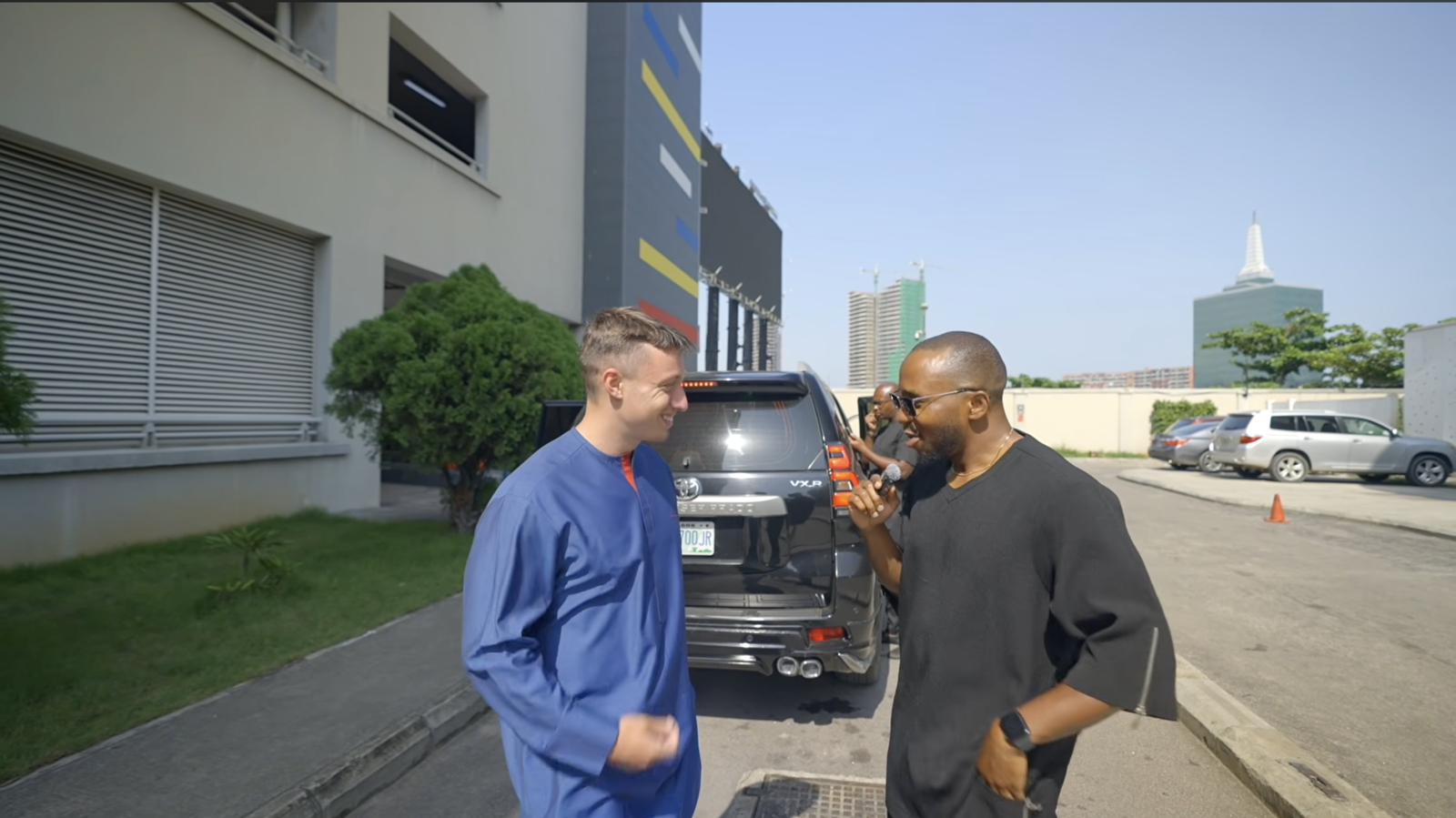
My journey started in Lagos when I linked up with James Dumoulin. James is the 24-year-old creator behind The School of Hard Knocks, one of the largest business media brands globally, boasting over 20 million followers.
Over four intense days in Lagos, I shadowed James as we connected with heavyweights shaping the financial and industrial landscape of the continent (from tech visionary Iyinoluwa Aboyeje to industrial titan Aliko Dangote).
Before earning $12 million in a single year across his companies, James was working for $7.25 an hour at Chick-fil-A and taking $10-a-week construction jobs in high school. His trajectory shifted dramatically when he mastered short-form video and viral content during college.
James broke down his core three-pronged business model for me:
- Ad Revenue & Brand Partnerships: While ad revenue and brand deals form the foundational baseline for video creators, real scale comes from owning the ecosystem.
- Private Subscription Communities: James built a multi-million-dollar subscription community where members pay to get direct access and live Q&A sessions with 8-, 9-, and 10-figure entrepreneurs.
- High-Ticket Consulting: Leveraging his ultimate superpower—viral storytelling—he launched a high-margin marketing agency helping wealthy founders gain massive online visibility.
“If you have a great product or service but no one knows who you are, you’re invisible. The most visible people who master attention will always win.” — James Dumoulin
Yaba’s Silicon Lagoon
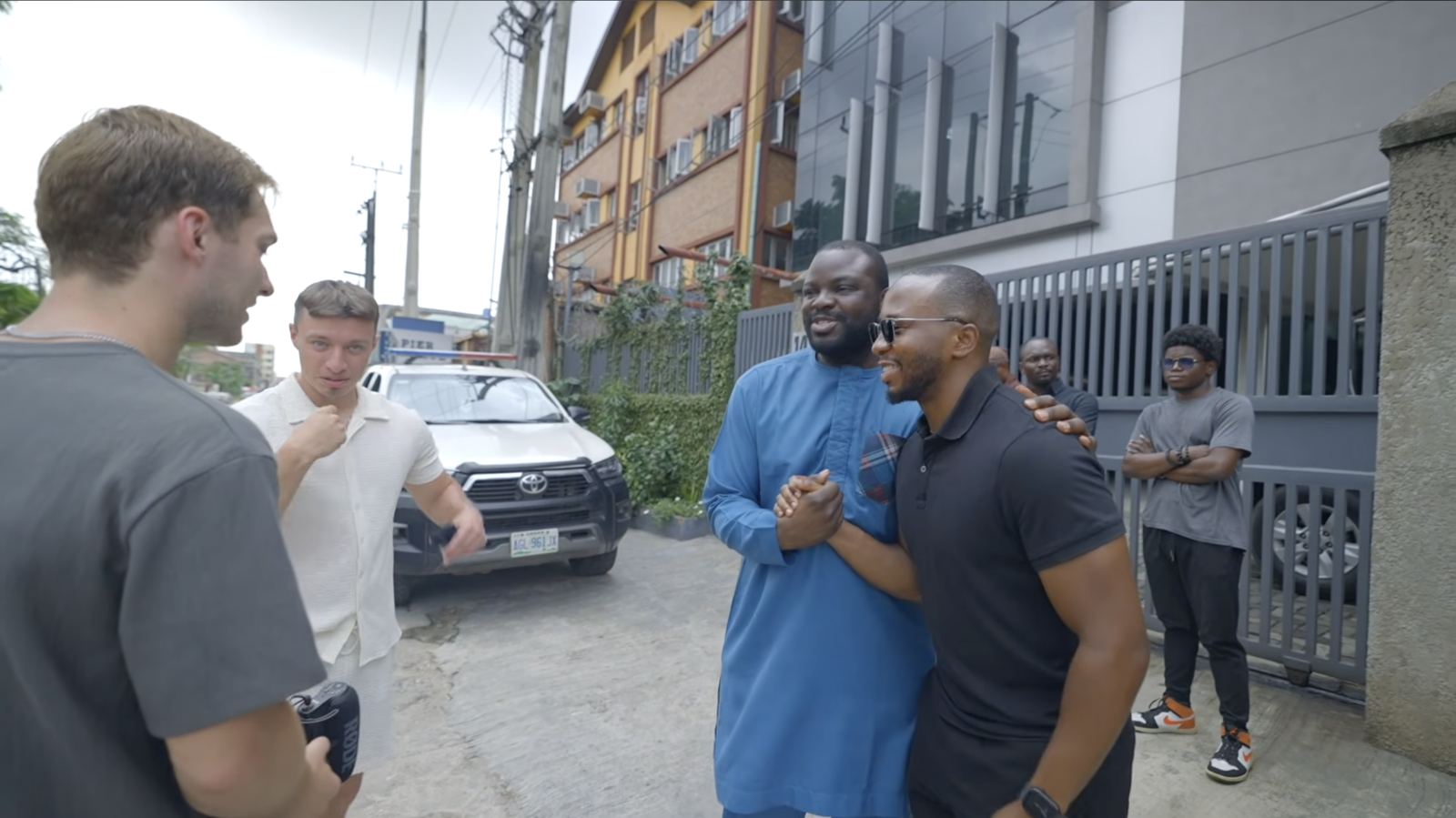
Next, James and I headed into Yaba, the technological heart of Lagos. This is the exact neighborhood Mark Zuckerberg walked through during his historic visit to Nigeria a decade ago.
There, we met Iyinoluwa Aboyeje, the youngest Nigerian to help build not just one, but two billion-dollar tech companies: Andela and Flutterwave.
Iyinoluwa’s path began right in his college dorm room after watching The Social Network. Realizing that Mark Zuckerberg built Facebook at 19, he saw no reason why an African entrepreneur couldn’t achieve the same global scale. Today, both Andela and Flutterwave have generated well over $100 million in revenue, cementing his status as a pioneer in African tech.
During our walk through Yaba, Iyinoluwa shared a striking perspective on the fundamental difference between doing business in North America versus Africa:
“In Nigeria, if you don’t make other people money, you don’t get to make money. In America, if you don’t make money, you can’t make other people money.” — Iyinoluwa Aboyeje
Reflecting on Iyinoluwa’s trajectory, James noted that the ultimate skill of top founders isn’t technical coding; it’s people management: getting the right people in the right seats, empowering talent, and aligning incentives.
Inside the $40 Billion Dangote Mega-Refinery
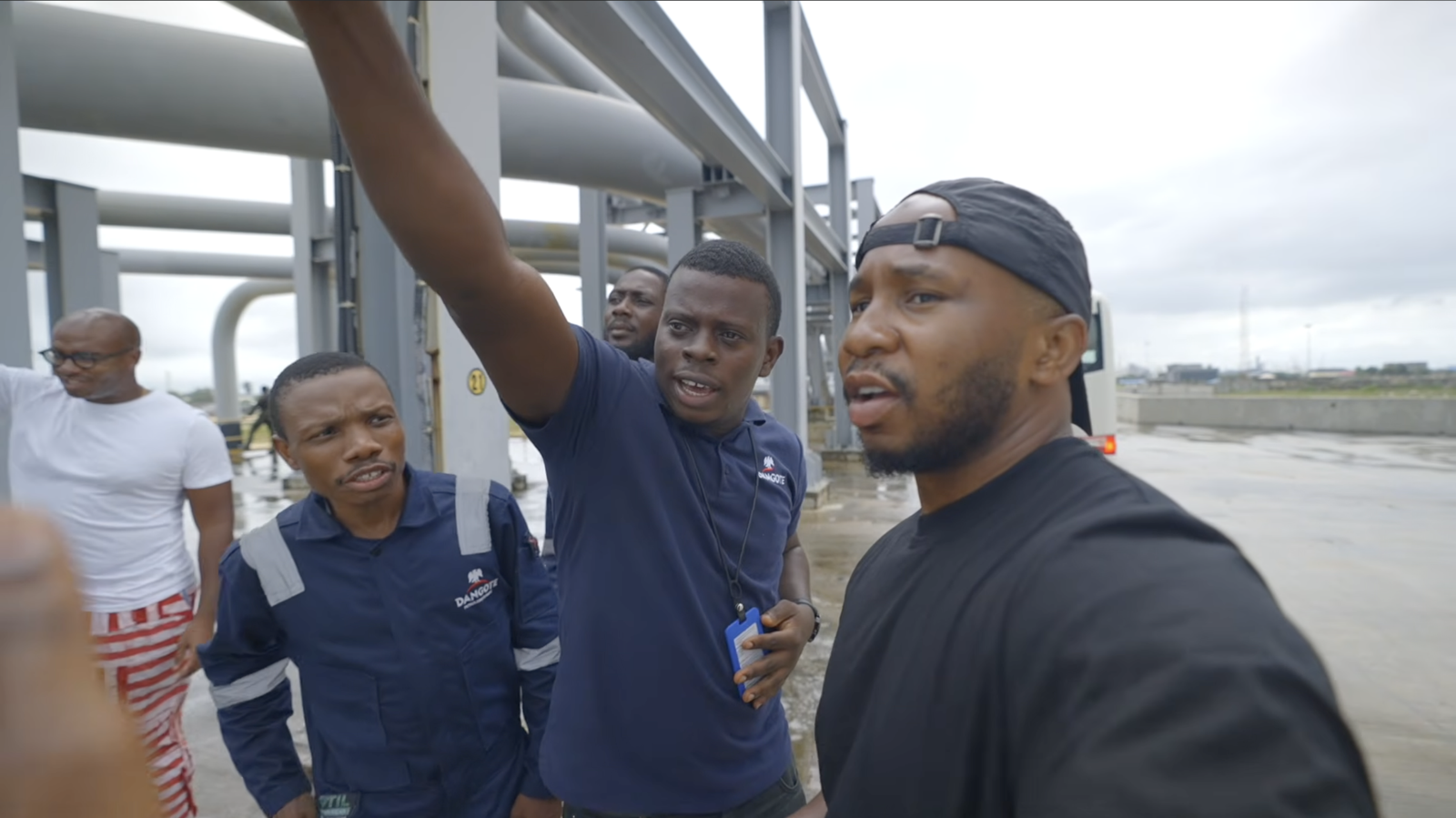
Securing an interview with Africa’s richest man required navigating an unpredictable schedule. After weeks of planning, our initial meeting with Aliko Dangote was paused due to urgent corporate commitments. But while waiting for a confirmed slot, we were invited to tour the crown jewel of African industrialization: The Dangote Petroleum Refinery in Lekki, Lagos.
Driving into the facility, the scale was mind-boggling. Spanning thousands of hectares, it is the largest single-train refinery on earth. Designed to refine 650,000 barrels per day, the facility is already pushing near 700,000 barrels daily to meet global demand.
The sheer engineering required to construct this massive complex is astounding:
- Land Reclamation: Over €300 million was spent over four years just dredging sand from the ocean floor to build the foundation of the refinery.
- Offshore Logistics: Because no commercial port in Nigeria could handle their heavy industrial equipment, Dangote built a private deep-sea jetty featuring 5 Single Point Moorings (SPMs) located 25 kilometers out at sea.
- Distribution Fleet: To move refined products nationwide, the company procured over 5,000 custom trucks and tankers, with each individual truck costing over ₦180 million.
Walking through the fertilizer plant, petrochemical testing labs, and sprawling pipe racks, you quickly realize this isn’t just a business; it’s a sovereign-scale infrastructure project designed to eliminate fuel imports across West Africa.
Face-to-Face With Africa’s Richest Man: Aliko Dangote
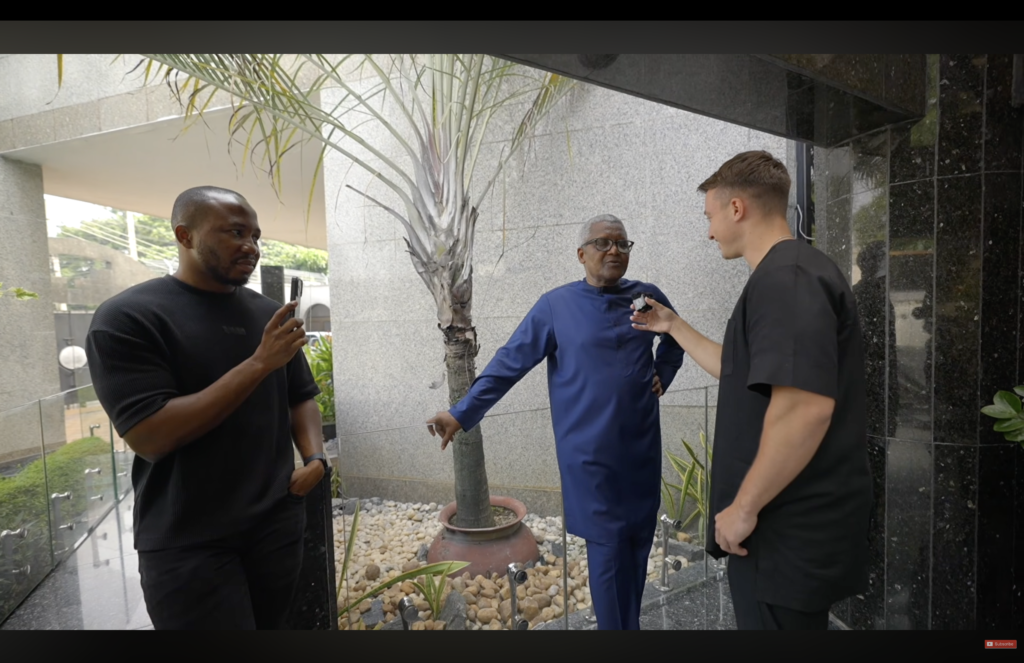
The next day, the call finally came through: Aliko Dangote was ready to receive us at his private residence in Victoria Island, Lagos.
Expecting an over-the-top mansion, I was immediately struck by his understated living space and commitment to minimalism. Standing face-to-face with a man whose operations span entire continents was a humbling moment.
While Forbes estimates his net worth between $30 billion and $38 billion, Dangote brushed off the title, pointing out that his industrial refinery asset alone is valued at over $40 billion. After pulling in roughly $10 billion in revenue in a single quarter, his team is now focused on “Vision 2030″—a bold target to generate over $100 billion in annual revenue out of Africa, backed by a planned $46 billion capital investment budget.
Dangote shared the key strategic principles that guided his rise from selling sweets as a primary school student to constructing global conglomerates:
Backward Integration
“We realized that importing items like cement, sugar, and fuel was simply importing poverty and exporting jobs. We made a deliberate pivot to backward integration—producing locally what we previously imported.”
“Get Rich Slow”
When asked about competition and building wealth, Dangote echoed a principle popular among long-term investors: real wealth requires decades of patience. Building physical infrastructure takes time, but once operational, it creates an unshakeable moat.
The Case for Africa
Dangote emphasized why global capital should not overlook the African continent:
- Demographics: Over 70% of the population is under 30 years old.
- Resources: Africa holds 60% of the world’s arable land and two-thirds of its key mineral reserves.
- Population Growth: Projected to reach 2.5 billion people by 2050.
“The real future is Africa. If we don’t invest in our continent, no one else will.” — Aliko Dangote
Conclusion & Summary
Spending four intense days traversing Lagos alongside James Dumoulin provided a powerful masterclass in value creation. Whether you are a creator building a digital audience or an industrialist laying subsea pipelines, the core tenets of success remain remarkably consistent:
- Master Attention: Value creation requires visibility; if people don’t know you exist, you cannot scale.
- Integrate Vertically: Control every step of your supply chain or business model to capture maximum value.
- Think in Decades: Short-term thinking yields short-term results. The largest fortunes are built slowly through physical assets and durable systems.
- Solve Local Problems: Build products and services that directly empower your community and generate shared prosperity.
Next Steps for You:
- Watch the Video: Catch the full behind-the-scenes documentary on YouTube to see the complete tour of the Dangote refinery and full interviews!
- Subscribe: Click the subscribe button and turn on notifications so you never miss an episode as we highlight Africa’s top innovators.
- Level Up Your Content: Interested in building your own media business? Check out the Creator Lab Academy via the link in the video description to access practical lessons!